
How a café and boutique on La Brea became a collaboration across cities, crafts, and cultures.
There is a difference between making a space about a place and making a space with it.
From the beginning, we knew HOUSE OF MENA couldn’t simply borrow the visual language of the Middle East and North Africa. We didn’t want to fill a room with arches, put za’atar on the menu, call it “inspired by the region,” and stop there.
If we were going to build a house for MENA in Los Angeles, we wanted the region to have a hand in building it.
So HOUSE OF MENA began moving back and forth across an ocean long before the doors on La Brea were ready to open.
Furniture was being made in Cairo. Ceramics were taking shape in Egyptian studios. Designers were sending collections from cities across the region. Samples, drawings, fabrics, finishes and boxes travelled between time zones. WhatsApp threads ran late into the night.
Little by little, the house started filling up.
Made there, lived in here
Some of our favorite things inside HŌM didn’t begin in Los Angeles at all.
Our custom furniture and fixtures were produced in Cairo by Urban Things, a studio whose approach is deliberately slow and rooted in craftsmanship. Together, we worked through materials, finishes and details for pieces that would eventually become part of everyday life at HŌM: café tables and chairs, displays, mirrors, sofas and our custom mashrabiya.
That mashrabiya became one of the most important pieces in the entire space.
The idea started simply: we wanted somewhere people would naturally sit together.
Not a waiting area. Not seating designed to maximize turnover. A place where one coffee could accidentally become two hours.
Our original thought was a conversation pit and we translated that instinct through the language of the mashrabiya, the architectural latticework found throughout the Arab world. The traditional form filters light, air and sight; ours turns that language into a contemporary gathering place. Even the pattern in the woodwork comes from the HOUSE OF MENA emblem itself.
It felt right that one of the most recognizably “HŌM” pieces in Los Angeles would be built in Egypt.
The details you notice later
We’ve always loved spaces that reveal themselves slowly.
The first thing you notice might be the shape of the room. Then the color of a chair. Then, on your third visit, the small symbol carved into something you’ve sat beside every week.
Our brand emblem appears throughout the space in ways that aren’t always obvious. Its shape comes from the Ō in HŌM and can read almost like a house or an eye; the diamond at its center references the marks used in Arabic writing. The same language moves from graphic identity into furniture and architecture.
Even the ceramics carry a message.
We worked with Egyptian studio Stonia on custom café pieces engraved with صحتين — sahtein. Literally, “two healths,” it’s the expression you hear around tables across the Arab world: something between bon appétit, enjoy, and a wish that whatever you’re about to eat brings you health and happiness.
It’s a small thing.
But houses are made of small things.
The phrase someone says when they put a plate in front of you. The cup your aunt always uses. The chair everybody fights over. The serving tray that only comes out when people visit.
Those details were as important to us as anything grander.
A boutique should tell you where something came from
The same thinking shaped the boutique.
We weren’t interested in building a rack of “Middle Eastern brands.” MENA is too large, too contradictory and too creatively alive to be flattened into one aesthetic.
Instead, we wanted the assortment to feel almost like walking through conversations happening across the region right now.
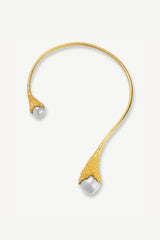
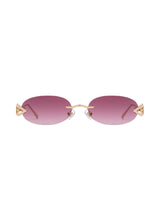
Sculptural Egyptian jewelry beside Palestinian pantry goods. Eyewear from a Lebanese designer beside Cairo streetwear. Independent magazines, art objects, fashion, ceramics, books, food and pieces you may have never encountered in Los Angeles before.
The point isn’t that everything looks alike.
The point is that it doesn’t.
We like to describe the boutique as an evolving gallery of MENA creativity, and that’s probably the closest description: every designer brings a different city, craft, perspective or visual language into the house.
Curation, for us, isn’t about making everything match.
It’s about bringing our peoples talent into the conversation.
And then there is the coffee
Of course, every house needs somewhere to sit.
Across MENA, coffee has rarely just been caffeine. It marks arrivals, introductions, condolences, negotiations, gossip, mornings, late nights and the moment somebody says they’re leaving before staying another hour.
That social ritual became the foundation of the café. The idea was never simply to put regional flavors onto a standard coffee menu, but to treat coffee as part of the hospitality itself.
That’s why we took the obsessive route.
We studied coffee. Took classes. Sourced ingredients. Worked behind the bar. Learned what a café feels like from the other side of the counter, because if this was going to be the kitchen of our “house,” we wanted to understand the craft from the ground up.
Eventually, that work turned into a menu where familiar flavors show up in slightly unexpected places: cardamom and rose, dates, hibiscus, orange blossom, Turkish coffee and the flavors we grew up around finding their way into the rhythm of an LA café.
A house isn’t finished when construction ends
Maybe that is the part of HOUSE OF MENA we care about most.
The physical space can be finished. The furniture can arrive. The coffee machine can turn on. The clothes can be hung.
But a house doesn’t become a home because someone completed the interiors.
People have to live in it.
So after hours, we want the room to keep changing: listening parties, supper clubs, coffee readings, designer drops, music, panels, classes, shopping nights, people sitting too long, meeting someone new, bringing someone back. The programming was designed from the beginning to make HŌM something that continues to evolve with the people inside it.
We hope you come because you heard the coffee is good.
Or because you want the glasses.
Or because your friend dragged you to a listening party.
And then maybe, somewhere between the first cup and the second, you stay longer than you meant to.
That would feel familiar to us.
After all, in the houses we grew up in, nobody ever really left on time.
Yalla. The door is opening soon.


