
Ask someone what “Middle Eastern design” looks like and you’ll probably get a familiar set of references: arches, mosaics, calligraphy, gold, maybe a carpet or two.
None of those things are wrong.
They’re just nowhere near the whole story.
The Middle East and North Africa is not one visual language. It is dozens of cities, histories, dialects, subcultures, materials, memories and contradictions. Cairo does not look like Beirut. Beirut does not look like Casablanca. Casablanca does not look like Jeddah. And the work coming out of those places today is just as varied.
That is the starting point for the boutique at HOUSE OF MENA.
Our assortment brings together fashion, jewelry, accessories, art, home and lifestyle brands from across the region, with the goal of showing the breadth of contemporary MENA creativity rather than reducing it to a single aesthetic.
There is no “MENA aesthetic”
And there shouldn’t be.
One designer might work in sculptural metal. Another in technical fabrics. Another might reference something deeply regional without using a single obvious cultural symbol.
That freedom matters.
For a long time, work from the region has often been expected to explain itself; to look recognizably “Middle Eastern” before it is allowed to simply be considered good design.
But contemporary MENA designers are doing something more interesting.
They are designing from where they are, not necessarily about where they are.
Jude Benhalim can make jewelry in Cairo that feels architectural and futuristic. Karen Wazen can build a global eyewear brand from a Lebanese point of view. Labels like MESH MESH, MEDINA, RIGASH and ATLAL FROM GALBI each approach fashion and accessories through entirely different visual languages.
At HOUSE OF MENA, those differences are not something to smooth over.
They are the reason for the curation.
Our current boutique assortment intentionally brings together established names and emerging designers rather than following one prescribed look.

Culture does not have to be literal
A piece does not need calligraphy on it to be Arab.
A garment does not need embroidery to carry memory.
A chair does not need to reproduce a traditional form to be Egyptian.
Culture can show up in material, proportion, humor, color, attitude, craftsmanship, or even in the way something is made.
Sometimes it is obvious.
Sometimes it is only felt.
That is also how we approached HOUSE OF MENA itself. The intention was never to recreate a traditional MENA interior literally. The space instead interprets the region through contemporary form, warm materials, architectural references and details that feel familiar without becoming costume. That same philosophy runs through the boutique.
The new souvenir
There is another idea we keep coming back to: what do you bring home from a place?
For years, the answer was often the souvenir; an object specifically designed to represent somewhere else.
But maybe the more interesting object is simply something people there actually want.
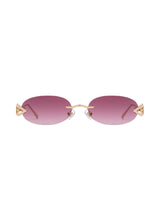
A pair of sunglasses from a Lebanese designer.
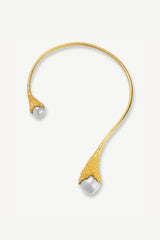
A necklace designed in Cairo.
A magazine documenting the region’s fashion culture.
A bag from a new label you had never heard of before walking through our door.
The object does not need to announce where it came from.
Its story can unfold later.
That is what we want discovery at HŌM to feel like.
Why put all of this next to coffee?
Because that is how culture actually works.
It does not live in departments.
Fashion is next to food. Music is playing while someone drinks coffee. Someone at the next table is wearing a piece you ask them about. A magazine becomes a conversation. A coffee turns into an afternoon.
HOUSE OF MENA was created as both café and boutique because we never wanted culture to feel like something displayed behind glass.
The café is built around the region’s traditions of gathering and hospitality; the boutique brings together the designers, artists and brands shaping its creative present. The intention is for the two to exist naturally beside one another.
Come for coffee.
Find a designer.
Stay longer than you meant to.
The point
HOUSE OF MENA is not trying to define what MENA looks like.
We’re much more interested in making space for all the ways it already looks.
Polished and strange. Minimal and maximal. Traditional and completely new.
Sometimes all at once.
That is the MENA we know.
And that is the MENA we want you to meet.


